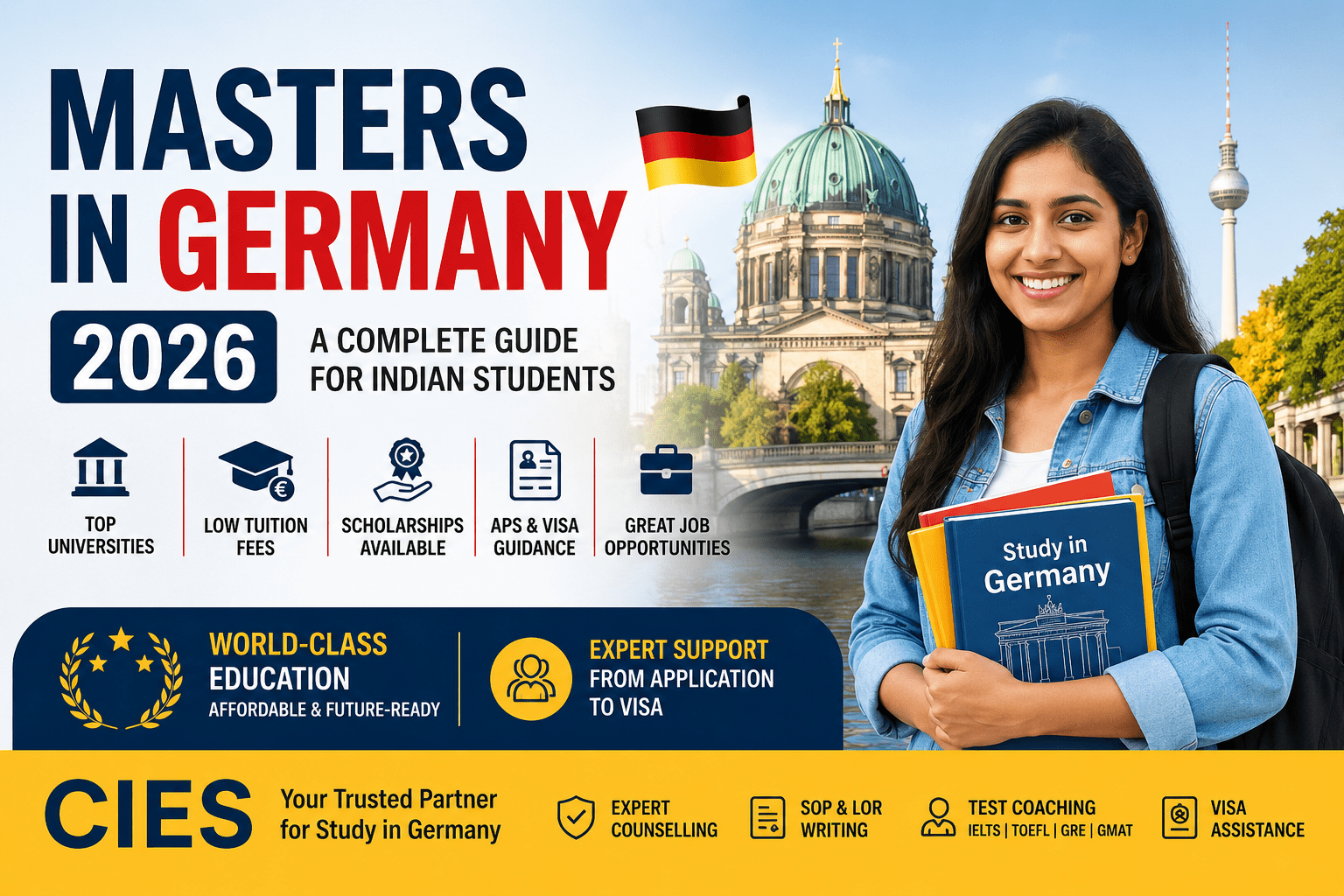
Every year, thousands of Indian students pack their bags for Germany and it’s not hard to see why. World-class universities, tuition-free public education, and a job market hungry for skilled graduates make Masters programs in Germany for Indian students one of the smartest investments in higher education today. If you’re weighing your options for a master’s degree abroad, here’s everything you need to know before you apply.
Why Indian Students Are Choosing Germany for Their Master’s Degree
Germany has quietly become the go-to destination for Indian postgraduate students, and the numbers back it up Indians are now one of the largest groups of international students in the country. A few reasons stand out:
- Little to no tuition fees at most public universities, even for international students
- Globally recognized degrees from institutions ranked among the world’s best
- Strong industry ties with companies like Siemens, Bosch, BMW, and SAP
- 18-month post-study work visa to find a job after graduation
- 17,000+ programs across engineering, IT, management, and applied sciences
Weighing Germany against other study destinations? Here’s what makes it stand out.
Popular Masters Programs in Germany for Indian Students
German universities are known for their technical and research-driven curriculum, which is why STEM fields dominate the list of popular choices among Indian applicants. Some of the most sought-after specializations include:
- Mechanical and Automotive Engineering
- Electrical Engineering and Information Technology
- Data Science and Artificial Intelligence
- Renewable Energy Engineering
- Computer Science and Software Engineering
- Business Administration and Management
- Structural and Civil Engineering
Engineering remains the biggest draw for Indian applicants, and top German universities, specializations, and career prospects for engineers are worth a closer look if that’s your field. For a full breakdown of eligibility, fees, and careers across all disciplines, this guide to MS programs in Germany covers it in depth, and those leaning toward a management career can dig into what an MBA in Germany really involves.
Eligibility Criteria for Masters Programs in Germany
While requirements vary slightly between universities, most master’s programs in Germany expect Indian applicants to meet the following:
- A recognized bachelor’s degree (minimum 3 years or 180 ECTS credits)
- A relevant academic background matching the intended master’s specialization
- Proof of English proficiency (IELTS/TOEFL) for English-taught programs, or German proficiency (TestDaF/DSH) for German-taught ones
- APS Certification, mandatory for Indian students applying to German universities
- A strong Statement of Purpose and Letters of Recommendation
APS Certification trips up a lot of first-time applicants simply because they leave it too late it’s worth starting this alongside your university shortlisting rather than after.
Cost of Studying a Master’s in Germany
One of the biggest draws for Indian students is affordability. Here’s what your budget typically looks like:
- Tuition fees: Free or nominal at most public universities (except Baden-Württemberg, which charges non-EU students €1,500/semester, and select private universities or professional degrees like LL.M./MBA)
- Semester contribution: €200–€300, which usually includes a public transport pass
- Living expenses: Roughly €800–€1,000 per month, covering rent, food, insurance, and transport
Every student visa application also needs a German Blocked Account in place a financial guarantee that proves to the consulate you can support yourself during your studies. If tuition and living costs feel like a stretch, education loans built specifically for Germany-bound students can bridge the gap.
Scholarships That Can Fund Your Masters in Germany
Don’t let costs hold you back Germany offers generous scholarship opportunities for international students, including:
- DAAD Scholarships
- Deutschlandstipendium
- Erasmus+ Funding
- University-specific scholarships
Eligibility and deadlines differ across these, so it’s worth mapping them against your program shortlist early rather than applying to scholarships as an afterthought.
Documents and Visa Requirements
Once you’ve secured admission, the next steps involve:
- Blocked Account setup to meet the financial requirement for your visa
- Health insurance, which is mandatory for every international student, and choosing a plan that meets German visa requirements is worth getting right the first time
- German student visa application, including proof of admission, funds, and insurance
- Accommodation, ideally sorted before you land housing options near German university towns fill up fast around intake season
- Flight booking, where student-fare tickets to Germany can save a meaningful amount over regular fares
Do You Need German Language Skills?
Not necessarily. Germany offers over 11,000 master’s programs taught entirely in English, so you don’t need to be fluent in German to apply. That said, picking up basic German makes daily life, part-time work, and networking significantly easier structured A1 to B2 language courses are a good way to get there before you leave.
Career Opportunities After a Masters in Germany
Germany’s economy runs on engineering, technology, and manufacturing which means master’s graduates are in high demand. After completing your degree, you get an 18-month post-study work visa to look for a job, and after two years of employment, you become eligible for an EU Blue Card or permanent residency. Average salaries for master’s graduates in fields like engineering and IT often exceed ₹40 lakh per year once converted, making Germany one of the most financially rewarding study-abroad destinations for Indian students.
Getting the Process Right
Applying for a master’s in Germany involves multiple moving parts university shortlisting, APS Certification, SOPs, Blocked Accounts, and visa processing, to name a few. It helps to see how this has played out for students who’ve actually gone through it: a few real journeys from application to admission show what the timeline and hurdles genuinely look like.
If you’d rather have someone map out your specific profile against university and program options, a free counselling session is the fastest way to get clarity on where you stand.
FAQs
Yes, at most public universities. You’ll only pay a semester contribution of €200–€300. Exceptions include Baden-Württemberg (€1,500/semester for non-EU students), private universities, and select professional degrees like LL.M. or MBA.
Some universities accept alternatives like Duolingo English Test or waive the requirement if your previous degree was taught in English but this varies by university and program, so it’s best to check individually.
It typically takes 6–12 weeks, though this can vary based on your consulate and season. Starting early is strongly recommended.
APS Certification verifies the authenticity of your academic documents and is mandatory for all Indian students applying to study in Germany, including master’s programs.