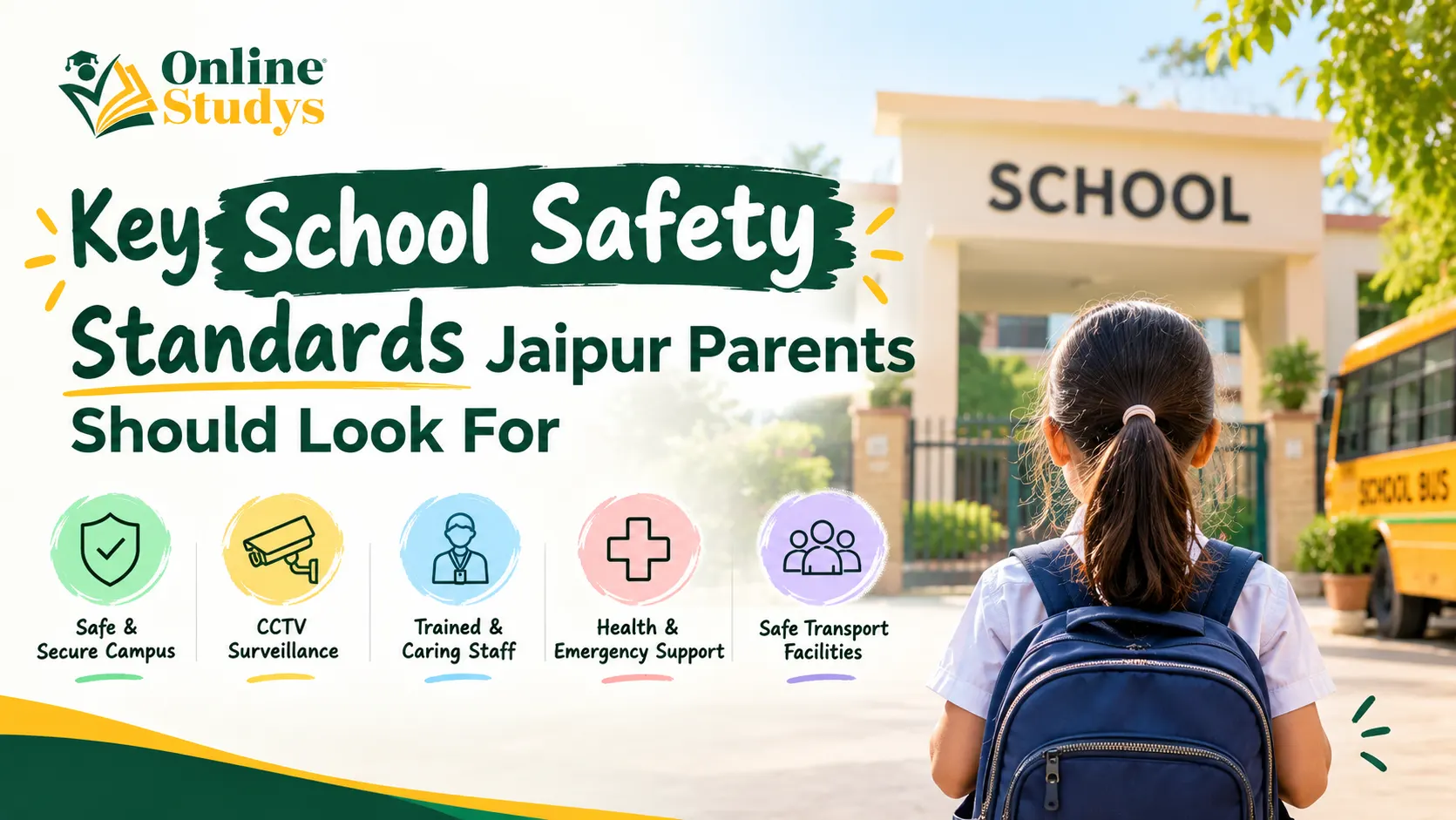
Picking a school involves much more than academics, buildings or extracurricular activities. For most parents, the top concern is knowing their child will learn in a safe, secure and supportive setting. Safety today goes well beyond CCTV cameras and security guards. It also covers emergency preparedness, child protection policies, emotional well-being, safe transport and healthy learning spaces.
Parents searching for the best CBSE school in Jaipur or an English medium school in Jaipur can make a better-informed choice by understanding what safety standards to expect. National bodies such as the Central Board of Secondary Education (CBSE), the National Commission for Protection of Child Rights (NCPCR) and the National Disaster Management Authority (NDMA) have issued detailed guidelines to help schools keep children safe.
Before you settle on a school, here are the main safety areas every Jaipur parent should assess.
1. Building and Fire Safety
A school’s premises should meet the required safety standards and hold valid building stability and fire safety certificates from the competent authorities. Look for clearly marked emergency exits, clear evacuation routes, working fire extinguishers, well-defined evacuation plans and regular fire safety inspections.
Parents can also ask whether the school holds periodic fire drills, keeps fire exits clear and easy to reach at all times, and trains both staff and students to respond properly in an emergency. These steps form part of CBSE’s school safety requirements.
2. Campus Security
Good school security pairs infrastructure with responsible supervision. Features to look for include:
- Controlled entry for visitors
- Procedures to identify visitors
- CCTV coverage in suitable areas
- Trained security staff
- Secure boundary walls and monitored entry points
Parents should also learn how the school manages visitors and handles student pick-up and dispersal.
3. Child Protection and Safety Policies
Physical safety is only one part of a secure learning environment. Schools should also have clear policies to prevent bullying, harassment, abuse and discrimination. Check whether the school has:
- Child protection and safeguarding policies
- Anti-bullying initiatives
- Grievance redressal mechanisms
- Trained counsellors or designated child protection staff
- Awareness programmes for students and staff
A school that puts children’s emotional safety first creates a place where students feel respected, confident and supported.
4. Safe School Transport
If your child travels by school transport, safety needs to extend beyond the campus. Parents should check whether:
- School buses are serviced regularly
- Drivers and attendants are verified and properly trained
- Vehicles meet safety regulations
- Students are supervised when boarding and getting off
Dependable transport helps children travel safely between home and school and gives parents greater peace of mind.
5. Health, Hygiene and Medical Readiness
A healthy environment supports both safety and learning. Key points include:
- Clean classrooms and washrooms
- Safe drinking water
- Well-kept sanitation facilities
- First-aid facilities
- Access to trained medical staff or emergency medical support
- Clear procedures for handling illness
CBSE expects affiliated schools to follow health, hygiene and water safety norms as part of their affiliation requirements.
6. Emergency Preparedness and Disaster Management
Schools should be ready for fires, earthquakes, medical emergencies and other unexpected events. Ask whether the school carries out:
- Regular evacuation drills
- Disaster management training
- Emergency response planning
- First-aid training for staff
- Safety awareness programmes for students
Good preparation means staff and students know how to stay calm and act correctly in an emergency. NDMA’s School Safety Policy stresses regular drills and preparedness planning.
7. Emotional Well-Being and Student Support
A safe school also looks after children’s mental and emotional health. Schools that promote well-being often offer:
- School counsellors
- Social and emotional learning programmes
- A positive classroom culture
- Teacher training to spot behavioural concerns
- Channels for parent-school communication
Children learn better when they feel emotionally secure. Recent child safety guidelines also place emotional safety alongside physical security.
Questions to Ask During a School Visit
A visit shows how safety measures work day to day. Alongside observing the campus, ask a few practical questions to gauge the school’s commitment:
- Does the school hold regular fire and evacuation drills?
- Is there a trained counsellor or student wellness team on campus?
- What safety rules apply to school transport?
- How does the school monitor visitors and control entry?
- What child protection and anti-bullying policies exist?
The answers can reveal a lot about the school’s safety culture and support a more informed admission decision.
No single feature defines school safety. It comes from a mix of policies, infrastructure, preparedness and a culture that puts children’s well-being at the centre of every decision. Asking the right questions during visits helps parents choose with confidence.
Conclusion
When assessing a CBSE school in Jaipur, parents should look past academic results and campus facilities. A truly safe school combines solid infrastructure, effective child protection policies, emergency preparedness, health and hygiene standards, secure transport and emotional support so that children can learn with confidence.
If you are looking for the best CBSE school in Jaipur, pick one that shows real commitment to safety through open policies, trained staff and ongoing improvement. At Seedling Public School, safety is supported by a secure campus, caring educators and a learning environment designed to help children grow academically, socially and emotionally.
FAQs
1. Are schools required to carry out safety audits?
Yes. Schools are expected to follow safety requirements set by education authorities and local regulators, including periodic inspections and certifications where applicable.
2. Can parents ask about a school’s safety policies before admission?
Yes. During admission, parents can ask about fire safety, child protection policies, transport rules, emergency preparedness and grievance mechanisms.
3. Must CBSE schools have a School Safety Committee?
CBSE requires affiliated schools to put safety measures in place and form committees in line with its affiliation and safety guidelines, to promote a safe learning environment.
4. Is CCTV enough to ensure school safety?
No. CCTV is just one piece. Real safety also needs trained staff, child protection policies, emergency planning, safe transport and attention to student well-being.
5. What should parents do if they notice a safety issue after admission?
Report it through the school’s designated grievance or complaint channel so it can be dealt with promptly and properly.