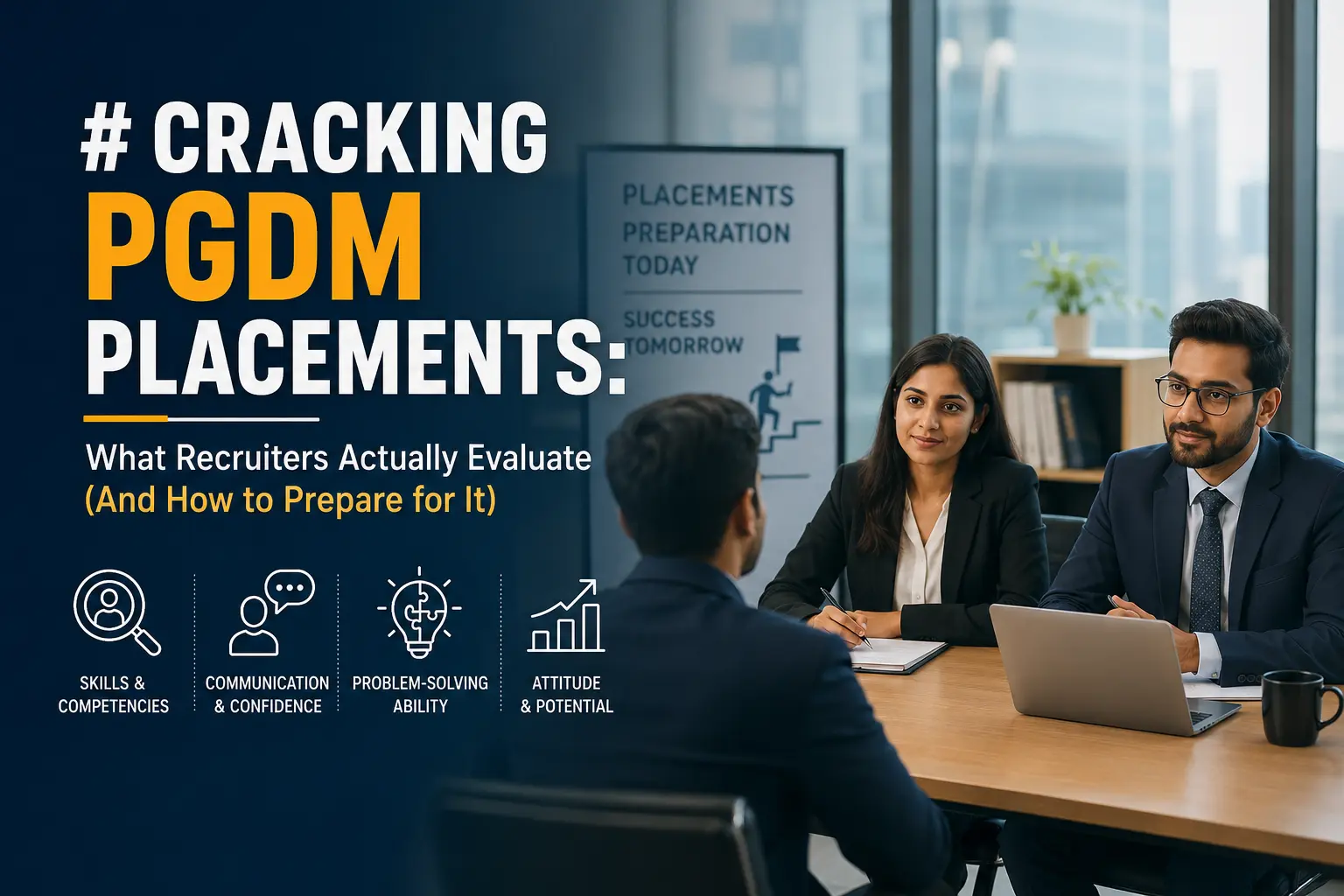
Every placement season, the same pattern repeats itself. Two students with near-identical CGPAs walk into the same interview room. One walks out with an offer letter. The other doesn’t. What separates them is rarely intelligence or academic performance — it’s usually something recruiters can sense within the first few minutes of a conversation.
If you’re a PGDM student wondering what actually tips the scale in your favour, it helps to stop guessing and start understanding how recruiters really think.
Myth vs Reality: What Recruiters Are Actually Looking For
Myth: A high CGPA guarantees a good placement. Reality: Academic performance gets you shortlisted, not selected. Beyond that point, recruiters are evaluating how you think, not what you’ve memorised.
Myth: Placements are decided in the final interview. Reality: Recruiters form an impression from your resume, your body language in the waiting room, and even how you answer casual small talk before the “real” interview begins.
Myth: Technical knowledge matters more than soft skills. Reality: Most PGDM roles require you to work with cross-functional teams from day one. Recruiters often reject technically strong candidates who can’t articulate their thoughts clearly or collaborate under pressure.
Myth: You can prepare for placements in the final semester. Reality: The strongest candidates are the ones who started building their profile from semester one — not by cramming, but by consistently gaining exposure.
Four Things Recruiters Notice Before They Ever Ask a Question
1. How You Frame Your Own Story
Recruiters aren’t just checking whether you had an internship — they’re checking whether you can explain why it mattered. A candidate who says “I worked on a marketing project” makes far less impact than one who says “I identified a gap in our client’s social strategy and proposed a fix that increased engagement by 15%.” The story matters more than the title.
2. Whether You Ask Good Questions
Interviews are two-way conversations. Candidates who only answer questions come across as passive. Candidates who ask thoughtful questions about the company’s challenges, culture, or growth plans signal genuine curiosity — a trait recruiters actively look for in future managers.
3. How You Handle Ambiguity
Group discussions and case studies are rarely about reaching the “right” answer. Recruiters are watching how you respond when the problem is unclear, when someone disagrees with you, or when there isn’t enough data to be certain. Composure under ambiguity is one of the most underrated hiring signals.
4. Your Digital Footprint
Before you even walk into the interview, many recruiters have already looked you up online. An outdated LinkedIn profile, a generic summary, or no visible engagement with your field can quietly work against you — even if your resume looks strong on paper.
A Practical Roadmap to Placement Readiness
Rather than treating placement prep as a single event, think of it as a habit built across your PGDM journey:
- Early semesters: Focus on communication and analytical thinking through case competitions, classroom discussions, and business simulations.
- Mid-programme: Use internships to test real-world decision-making, not just to add a line to your resume. Ask for feedback and act on it.
- Pre-placement season: Refine your personal narrative — your resume, LinkedIn profile, and interview answers should all tell the same consistent story about who you are professionally.
- Throughout: Stay curious about the industry you want to enter. Reading about sector trends, company strategies, and market shifts gives you material to draw on in interviews that most candidates simply don’t have.
Why Your Institute’s Environment Matters
Placement readiness isn’t built in isolation — it’s shaped by the ecosystem around you. Institutes that create real opportunities for interaction with industry, through mentorship, live projects, and consistent recruiter engagement, give students a natural advantage. This is one of the reasons GL Bajaj Institute of Management and Research focuses heavily on connecting classroom learning with real business exposure, so students step into interviews with more than just theoretical knowledge.
Final Thought
Placements aren’t won in the last week of a programme — they’re earned through the small, consistent choices made throughout it: the internship you took seriously, the discussion you spoke up in, the feedback you actually acted on. Recruiters aren’t looking for perfect candidates. They’re looking for prepared ones.
Frequently Asked Questions
1. What is the biggest mistake PGDM students make during placement prep? Waiting until the final semester to start building employability skills, rather than treating it as an ongoing process.
2. Do recruiters care about extracurricular activities? Yes — activities that show leadership, initiative, or teamwork often stand out as much as academic achievements.
3. How important is a LinkedIn profile for placements? Very. Many recruiters review candidates online before the interview, so an updated, professional profile can influence first impressions.
4. Can a student with an average CGPA still get a strong placement? Yes, if they demonstrate strong communication, problem-solving ability, and real exposure through internships or projects.
5. What role does an institute play in placement outcomes? A strong industry-connected environment — through mentorship, live projects, and recruiter engagement — significantly improves a student’s readiness and confidence.