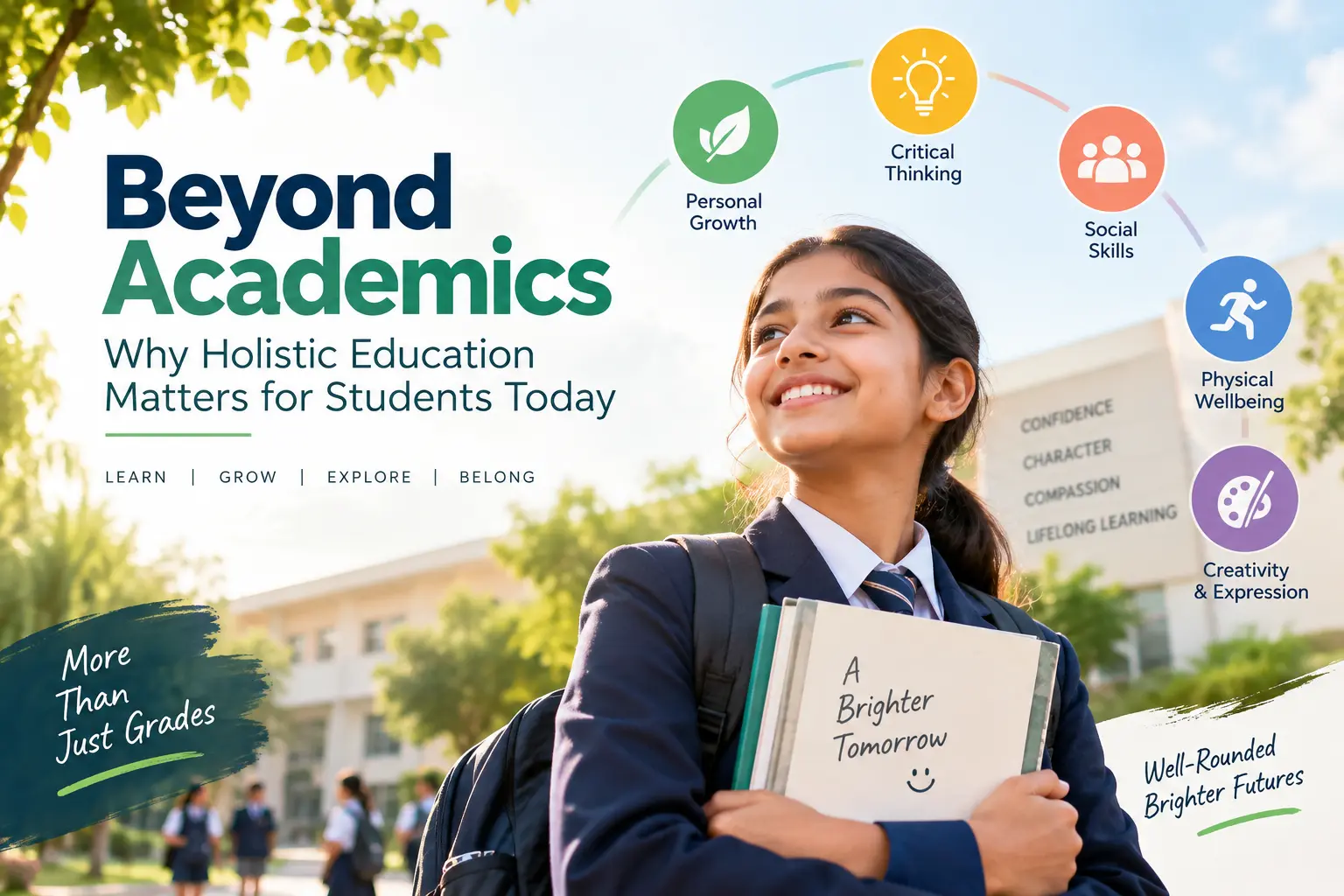
For decades, academic performance was treated as the single most reliable measure of a student’s future success. Report cards, board results, and entrance exam ranks defined what a “good” education looked like. But the world our children are stepping into has changed dramatically. Employers, universities, and communities now look for young people who can think critically, collaborate empathetically, adapt quickly, and lead ethically. These qualities are not built from textbooks alone. This is precisely why holistic education has moved from being an educational buzzword to becoming a genuine necessity for schools that want to prepare students for life, not just examinations.
What Holistic Education Really Means
Holistic education is an approach that nurtures every dimension of a child — intellectual, emotional, physical, social, creative, and ethical — rather than focusing narrowly on marks and rankings. It recognises that a student is not a data point on a merit list, but a whole person with curiosities, fears, talents, and aspirations. Instead of asking “How well can this child memorise?”, holistic learning asks “How well can this child think, feel, communicate, and grow?”
The approach draws from decades of research in cognitive science, developmental psychology, and educational theory. It reflects what forward-thinking educators have always known: children learn best when they feel safe, seen, and stimulated in multiple ways. Schools that embrace this model design their day around discussion circles, project-based learning, sports, service, arts, and reflection — not just chalk-and-talk classrooms.
Why This Approach Matters More Than Ever
The world our students will inherit is defined by rapid technological change, complex global challenges, and shifting career landscapes. Roles that dominate today’s job market did not exist twenty years ago; many that our children will do have not been invented yet. In such an environment, adaptability, emotional intelligence, and lifelong learning matter far more than the ability to reproduce a chapter under exam pressure.
Mental health is another factor that cannot be ignored. Anxiety, burnout, and social isolation among students have risen sharply in recent years. A curriculum that only measures output — grades, ranks, percentages — often leaves little room for the emotional and psychological wellbeing that makes learning sustainable. Holistic education explicitly addresses this gap by weaving mindfulness, counselling support, physical activity, and creative expression into everyday school life.
The Core Pillars of Holistic Development
1. Intellectual Curiosity Beyond the Syllabus
Holistic classrooms encourage inquiry, debate, and cross-disciplinary thinking. Students are taught to ask “why” and “what if” — not just “what is on the exam.” This builds independent thinkers who can research, evaluate evidence, and form reasoned opinions of their own.
2. Emotional and Social Intelligence
The ability to understand oneself and others is arguably the most important life skill of the twenty-first century. Structured activities like peer mentoring, group projects, house systems, and community service help students develop empathy, self-awareness, and collaboration. Established residential institutions such as Col Brown Cambridge School, an all-boys ICSE boarding school in Dehradun, have long understood how community living cultivates these strengths naturally — from shared meals to team sports to dormitory friendships that shape character for a lifetime.
3. Physical Wellness and Sport
Physical education is not a distraction from learning; it is central to it. Regular sport builds discipline, resilience, and confidence while improving cognitive function and mental health. Schools that treat their fields, courts, and pools as equally important as their classrooms produce students who understand the value of sustained effort and healthy competition.
4. Creativity, Arts, and Cultural Exposure
Music, theatre, painting, dance, and design are not “extras.” They are critical training grounds for imagination, self-expression, and cultural awareness. Progressive CBSE schools like Seedling Public School in Jaipur build creativity into the everyday timetable, giving students structured opportunities to explore identity, story, and expression alongside their core academic work.
5. Ethics, Values, and Citizenship
A well-rounded education prepares young people to contribute meaningfully to society. Service learning, environmental projects, and value-based education help students see themselves as active citizens rather than passive achievers.
What This Looks Like in Everyday School Life
The best holistic schools do not treat these dimensions as isolated add-ons. They integrate them into the rhythm of every day. A morning assembly may include a two-minute mindfulness practice. A history lesson may involve a group presentation that develops both content mastery and public speaking. Afternoons may combine sport, music practice, and community service clubs. Weekends may involve treks, drama productions, or peer-led leadership councils.
Assessment, too, looks different. Alongside written tests, students are evaluated on portfolios, projects, presentations, teamwork, and personal growth. Teachers act as mentors rather than instructors, and parent-teacher conversations focus on the whole child — not just marksheets. This shift changes the culture of a school in visible ways: students become more confident, more curious, and more comfortable in their own skin.
What Parents Should Look For
Parents evaluating schools today should look past glossy brochures and ask direct questions. Does the school have qualified counsellors and mentors? How much time is dedicated to sport, arts, and outdoor learning each week? What structures exist to help shy or struggling students find their footing? Are teachers trained in modern pedagogy? Do senior students take on genuine leadership responsibilities? The answers reveal far more about a school’s culture than its board results ever could.
It is also worth exploring different educational settings before deciding. Boarding schools such as Col Brown School offer immersive community living that builds independence and resilience, while forward-looking day schools like Seedling Public School offer strong academic grounding balanced with creative and co-curricular depth. Both models can nurture well-rounded learners when they are built on genuinely holistic foundations — the right fit depends on the child, the family, and the values you want the school years to reinforce.
Final Thoughts
The purpose of education has always been to prepare young people for the lives they will actually lead, not merely for the exams they will face along the way. As the world grows more complex, the case for holistic education becomes stronger, not weaker. Schools that invest in character building, emotional wellbeing, creativity, physical health, and ethical citizenship are giving their students an advantage that no ranking system can measure. Parents, educators, and communities that support this shift are shaping a generation that will not only succeed but also lead with empathy and purpose. If we truly want our children to thrive in the years ahead, we must move beyond academics — and embrace an education that develops the whole child, in mind, body, heart, and character.