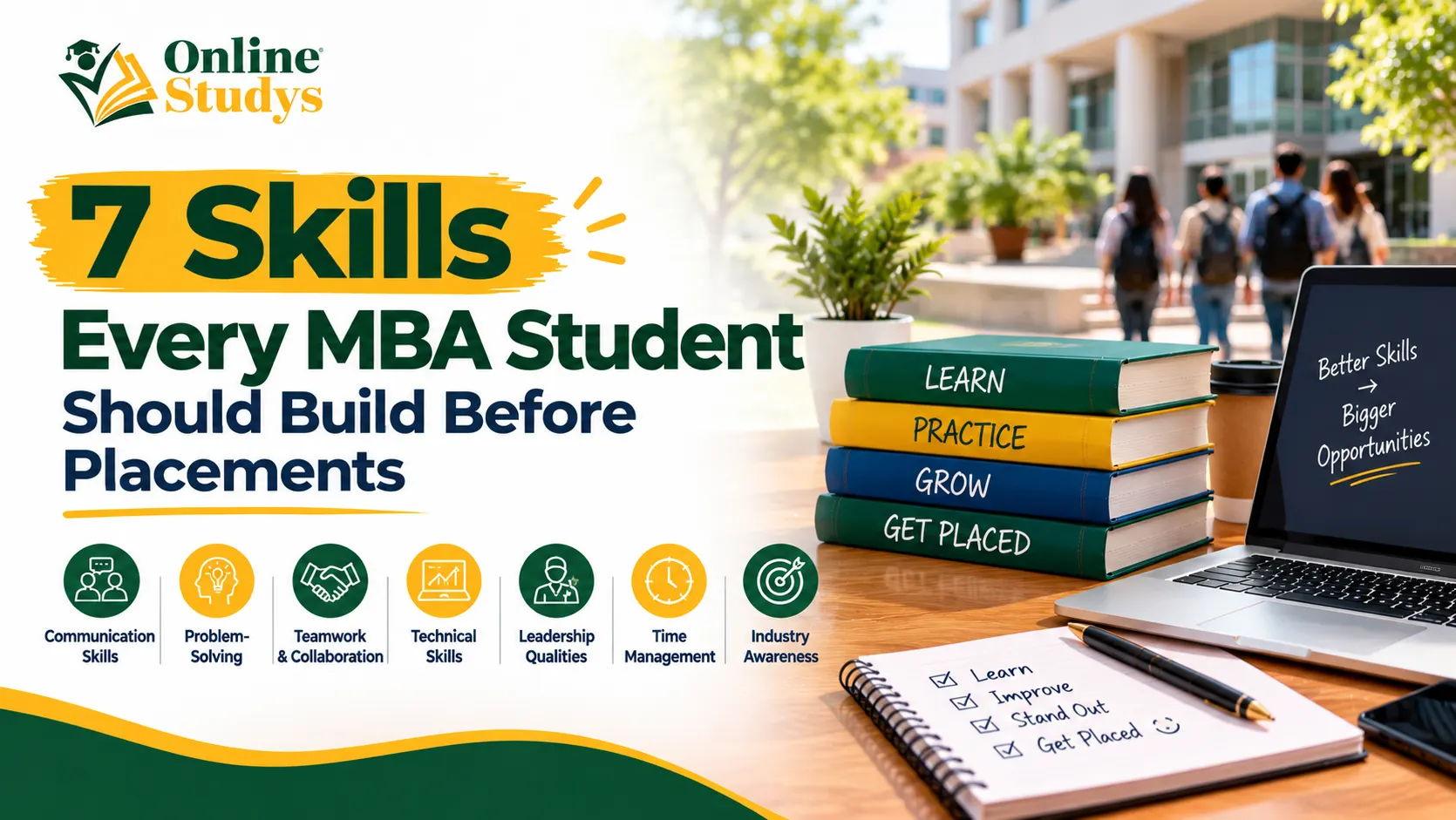
Most MBA students know that placements are coming, but many start preparing too late. Recruiters look at more than marks: they want to see how you communicate, analyse problems and work with others. The earlier you build these skills, the more confident you will be when the first placement process begins. Here are seven that matter most, and how to develop each one.
1. Communication and Presentation
Every stage of placements tests communication: your resume, group discussion, interview and later, client meetings. Practise explaining ideas simply and structuring your answers. Present case studies in class, join debates, and ask a friend to give feedback on your pace, clarity and eye contact.
2. Analytical Thinking and Excel
Management decisions rely on numbers. Learn Excel properly, including formulas, pivot tables and basic charts, and get comfortable reading financial statements and data. You do not need to be a data scientist, but you should be able to look at a table and explain what it shows.
3. Business Awareness
Interviewers often ask about recent business news, industry trends or a company they are interested in. Read credible business news regularly, and for each story ask what problem it reveals and how a manager might respond. This turns facts into judgement.
4. Teamwork and Leadership
MBA programmes are full of group projects, and recruiters know it. Take responsibility in a team, help resolve disagreements and be clear about your own contribution. Leading a club, event or project gives you real examples to talk about.
5. Problem-Solving Through Cases
Case studies teach you to break a messy situation into parts, weigh options and recommend an action. Solve cases from your coursework, practise a simple structure (problem, analysis, options, recommendation) and learn to justify your choices with evidence.
6. Digital and AI Literacy
AI tools are changing how work is done in marketing, finance, HR and operations. Learn what common tools can and cannot do, how to use them responsibly, and how to check their output. Recruiters value candidates who can use technology thoughtfully rather than blindly.
7. Professional Networking and Personal Branding
A clear LinkedIn profile, a well-structured resume and polite follow-ups can set you apart. Connect with alumni, attend guest lectures and ask thoughtful questions. Be honest about what you have done, since interviewers will probe every claim.
How Your College Choice Affects These Skills
The environment you study in shapes how easily you build these skills. When you research MBA admission in Greater Noida, or compare the best MBA colleges in Hyderabad, look beyond fees and rankings. Ask about:
- Live projects, case-based teaching and internships
- Guest lectures and industry interaction
- Training for resumes, group discussions and interviews
- The latest placement report, including median salary, roles and recruiters
- Faculty mentoring and student clubs
- Approvals, such as AICTE approval and, for PGDM programmes, the AIU equivalence letter
Do not rely on one headline figure. A transparent report and real practice opportunities matter more than a single high package.
A Simple Way to Start
Pick two skills to focus on each month and set one small goal for each, such as presenting twice or completing an Excel course. Track your progress and ask for feedback.
Conclusion
Placements reward preparation, not last-minute effort. Build these seven skills steadily through coursework, projects and internships, and choose a college that gives you the practice and support to develop them. Verify every college detail through official sources before you apply.
Frequently Asked Questions
1. When should MBA students start preparing for placements?
Ideally from the first semester, by building communication, analytical and business awareness skills alongside coursework.
2. Which skill matters most for MBA placements?
Communication is tested at every stage, but recruiters usually look for a balance of communication, analytical ability and teamwork.
3. What should I check when comparing colleges for MBA admission in Greater Noida or Hyderabad?
Check the curriculum, approvals, internships, placement report and training support, and visit the campus if you can.
4. Can I build these skills without work experience?
Yes. Academic projects, internships, club roles and case competitions give you real examples to discuss.